
Staffing operations
Knowing who to call before you’ve even opened your ATS feels like cheating.
Inside the 7:30 a.m. brief one staffing account manager built to decide who gets his first call.
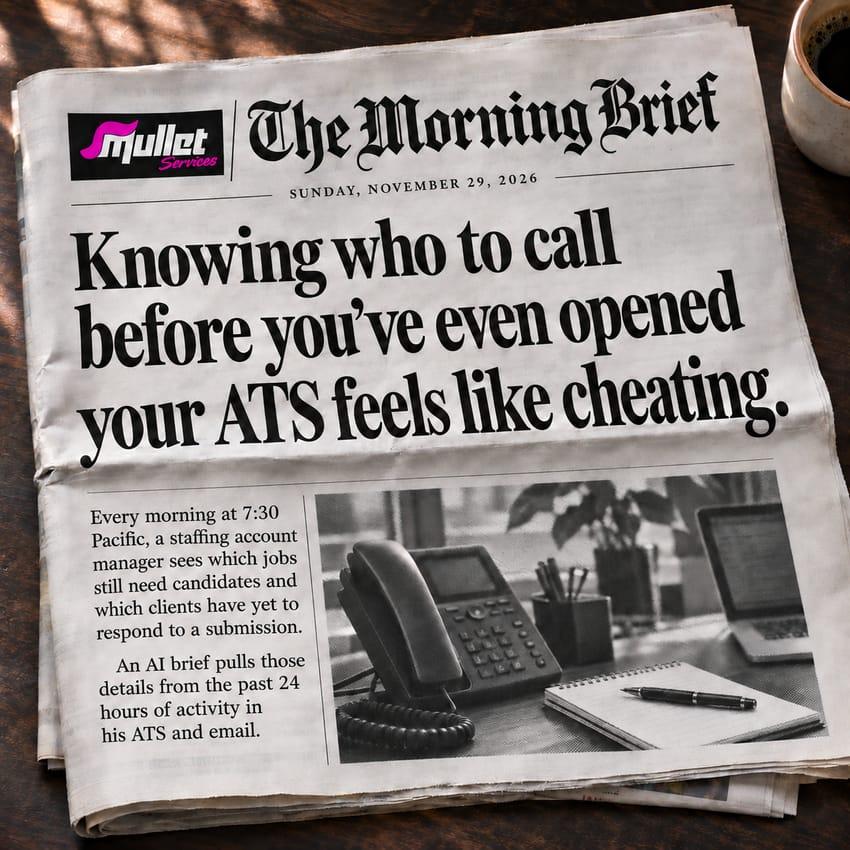
Every morning at 7:30 Pacific, a staffing account manager sees which jobs still need candidates and which clients have yet to respond to a submission.
An AI brief pulls those details from the past 24 hours of activity in his ATS and email.
When he shared his screen with us at Mullet Services, he opened that morning’s edition. At the top were his highest-priority actions. Below them were changes since yesterday, urgent follow-ups and a reminder about an interview later that day.
He’d already read it before we got on the call.
Here’s how he decided what belonged on that page, and how to sketch one for your own desk.
The most important follow-up can be the one with no new email
Say you sent a candidate to a hiring manager yesterday. This morning, three clients have emailed you. The hiring manager hasn’t.
You could answer every new message and still leave that candidate waiting for an update.
Your applicant tracking system (ATS) holds one part of the story. It shows when you sent the candidate. The email thread tells you whether the client replied and what they asked for. To decide whether to call, you need both. And a quiet inbox thread gives you very little reason to open it.
Which call comes first?
There’s a second problem. Even after you’ve pieced together what happened, you still have to choose what to do first. An open job with no candidates needs a different conversation from a submission awaiting feedback.
A list of yesterday’s activity leaves that sorting to you.
He gave the brief his morning questions
The account manager wrote custom instructions for an AI assistant that could read his ATS and email. He told it which situations mattered on his desk. If you wanted to sketch your own version, three questions from his setup make a good starting point.
Then he set the brief to run at 7:30 each morning. Each edition covers activity from 7:30 the previous morning through 7:29 that day.
He can sit down, read what changed and pick up the phone without writing a fresh prompt.
What would you put on page one?
He had future account managers in mind when he set this up. That may be the most useful part for a staffing team. A new hire can learn where the submissions tab is on day one. It takes longer to learn which quiet client thread an experienced account manager would open first.
Try this at your next morning huddle.
Ask someone which call they’d make first and what tipped them off.
Write down the answer in their own words. If it’s “I sent a candidate yesterday and I’m still waiting to hear back,” you’ve got the first instruction for your brief.
If you’d like help turning that question into a workflow for your desk, bring it to a free, 60-minute conversation with our staffing team.
Find your first AI win with Mullet Services →